Kuvera's Boke

2007-06-22

Irony: at least four million years old

According to a new paper in today's Science, developing immunity to a retrovirus that was common among primates four million years ago may have left humans more susceptible to HIV now.

Traces of a virus called PtERV1 (Pan troglodytes endogenous retrovirus-1) were found in chimpanzee and gorilla genomes, but did not seem to have affected humans despite living in the same areas.

Tests on modified cat cells appeared to confirm that the human form of a protein called TRIM5α (tripartite motif 5 alpha) increased resistance to PtERV1, whereas other primates' versions of TRIM5α are known to reduce susceptibility to types of HIV markedly.

Further tests found that different primates' forms of TRIM5α were effective in restricting either PtERV1 or HIV, but never both.

In the words of Science writer Jon Cohen, 'locking out one virus appears to have opened the door for another'.

Kaiser SM, Malik HS, Emerman M. (2007) Restriction of an extinct retrovirus by the human TRIM5 antiviral protein. Science 316(5832): 1756-8. (abstract here)

Labels: ,

2007-03-18

Scars of racism

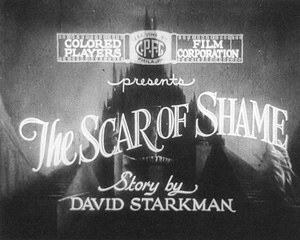
The Scar of Shame

In 1939, psychologists Kenneth and Mamie Clark began publishing papers based on experiments that had found young African American children to often perceive being white as preferable to being black. Their evidence was later used in the case of Brown versus Board of Education of Topeka, Kansas, in which the US Supreme Court ruled against racial segregation in American public schools.

Kiri Davis' first documentary A Girl Like Me has won an award at the Media That Matters Film Festival, and in part of it she has attempted to replicate Clark and Clark's famous 'doll experiment' to try to gauge how much things may have changed regarding African American children's views of themselves.

I have no idea how faithful she was to the psychologists' original methodology, or how comparable the two sets of experiments really are. Despite this, the sight of young African Americans repeatedly identifying the white doll in front of them as 'good' and the black as 'bad' cannot be anything but disheartening.

Found via a Gay Persons of Colour post.

Labels: , , ,

2006-10-29

On locations

An interesting article in the New Scientist last week on being in more than one place at the same time...

Labels:

2006-10-26

Genuine oil, from real snakes

Sense About Science are collecting signatures against new UK regulations that allow homeopathic products to make medical claims without any evidence of their efficacy.

You may want to sign up if you agree with the following:

  • Evidence-based medicine has been a major public gain of the twentieth century

  • Homeopathy is not evidence-based medicine

  • The new regulations on homeopathic products compromise standards of evidence and clear labelling

  • The policy change is damaging to patients' best interests

  • Evidence-based medicine is essential to public health; the growth of the homeopathic industry does not contribute to public health

  • Rules for the regulation of medicines should not allow homeopathic products to make unsubstantiated health claims


  • The full statement of support for evidence-based medicine is available here (pdf).

    Labels: , ,

    2006-08-20

    Anyone for free energy?

    Is this for real?

    As read in today's Observer.

    Labels: ,

    Pluto, still perched on its planetary precipice

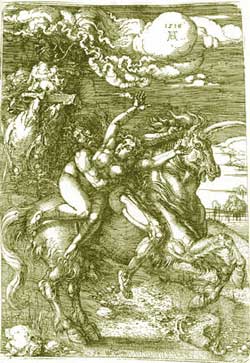
    Abduction of Proserpine on a Unicorn, etching by Albrecht Dürer (Web Gallery of Art)
    Abduction of Proserpine on a Unicorn, etching by Albrecht Dürer (Web Gallery of Art)

    Despite the draft definition released by the International Astronomical Union (IAU) on Wednesday that would have qualified Pluto's status as a planet and added three others, New Scientist reports that a competing proposal may yet see a return to the eight so-called 'classical' planets.

    The IAU Planet Definition Committee had said anything that is not a star but that is round and independently orbits the Sun should be considered a planet, while any planet farther than Neptune should also be called a pluton. This would mean that the four rocky planets (Mercury, Venus, Earth, Mars) and four gas giants (Jupiter, Saturn, Uranus, Neptune) would be planets, as would Ceres (currently classified as an asteroid), Pluto, Charon and 2003 UB313 ('Xena'). The latter three would also be plutons, and an unknown number of other objects could also be recognised as planets and as plutons in future, depending on how strictly 'roundness' is defined.

    On Friday, a group led by Julio Fernández from Montevideo's University of the Republic proposed that an additional criteria should be stipulated - that a planet should be 'by far the largest body in its local population'. If this was approved, the number of planets would return to eight and objects such as Pluto would be dwarf planets. It would be unlikely that any further unqualified planets would be added, since this would involve the discovery of a massive planet farther than Neptune.

    The IAU votes on Thursday, but in the meantime a straw poll of astronomers at John Hopkins University in Baltimore, which was released the same day as the second proposal, threw up a range of interestingly conflicting opinions.

    Of course this is more a matter of language than science, but I reckon we should return to eight 'proper' planets - much simpler (the textbooks would have to be rewritten either way!).

    Labels:

    2006-08-12

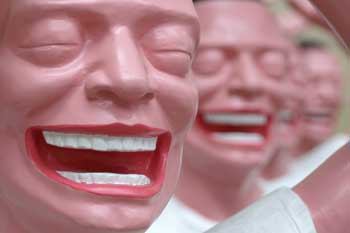
    Laugh? I nearly deconstructed...

    Laugh? I nearly deconstructed...

    See Ben's latest Bad Science post for a wee titter.

    Labels: ,

    2006-07-02

    A naturally selective anniversary

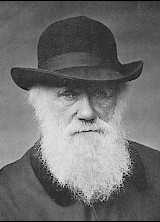
    Charles Darwin in 1880.
    Charles Darwin in 1880 (photo from Wikipedia).

    As noted by Afarensis, yesterday marked 148 years since the first time Charles Darwin's theory of natural selection was published, in a contribution to the proceedings of the Linnean Society in London.

    Having developed, mulled over and collected evidence for his theory over a period of twenty-odd years, Darwin's hand was apparently forced by his receipt of a letter from Alfred Wallace, who had independently come to similar conclusions.

    Labels: ,

    2006-06-25

    What's wrong with 'atheism'?

    Nothing as far as I'm concerned, so I have to admit to being slightly nonplussed by the Brights movement, which says it aims to promote a "naturalistic worldview, which is free of supernatural and mystical elements."

    I agree with Pandagon that calling yourself a 'Bright' simply sounds nerdy and superior - see Pharyngula for further interesting discussion.

    I have no problem calling myself 'atheist' when I want to express the fact that I do not believe in anything divine, and 'humanist' to say that I believe in making judgements about right and wrong without referring to supernatural concepts. I also call myself 'secularist' because I think the only way to avoid one belief group unfairly dominating all others is for states to not align themselves with any.

    Despite the fact that I do think religious beliefs are at best silly and at worst downright dangerous, I'm suspicious of atheists clubbing together to tell other people what they should and shouldn't believe (I'm perfectly good enough at doing that on an individual basis). I'm also not convinced that the apparent growing zealotry of Richard Dawkins and others is at all constructive in dealing with the very real threats posed by anti-secular groups.

    There is only one Divine

    Labels: ,

    2006-04-20

    Medical research using animals

    If you agree with the following three statements, you may consider signing an online petition:

    • Medical research is essential for developing safe and effective medical and veterinary treatments, requiring some studies using animals;
    • Where there is no alternative available, medical research using animals should continue in the UK; and
    • People involved in medical research using animals have a right to work and live without fear of intimidation or attack.
    From the site:

    The People's Petition gives a voice to the silent majority of people in Britain who want to show their support for medical research using animals in the UK.

    "It's a campaign for people who believe that this research, carried out under stringent animal welfare standards, is essential to the health and quality of life of humans and animals."

    It was set up by the Coalition for Medical Progress, an alliance of research charities, drug companies and medical, veterinary and scientific organisations.

    As reported today by BBC News, and in this Guardian article.

    Labels: , ,

    2006-04-17

    Four interesting blogs

    Deficient Brain
    Sinosplice
    The Scientific Activist
    God is for Suckers!

    Labels: , ,