Kuvera's Boke

2008-08-10

Psalm 9

O rose beyond the reach of time and of the senses
O kiss enveloped in the scarves of all the winds
surprise me with one dream
that my madness will recoil from you
Recoiling from you
In order to approach you
I discovered time
Approaching you
in order to recoil from you
I discovered my senses
Between approach and recoil
there is a stone the size of a dream
It does not approach
It does not recoil
You are my country
A stone is not what I am
therefore I do not like to face the sky
nor do I die level with the ground
but I am a stranger, always a stranger

(by Mahmoud Darwish, 1941-2008)

Labels: ,

2006-08-13

Silenced in America

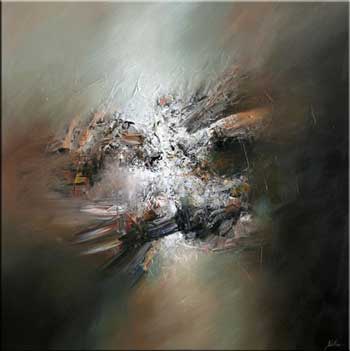
Silenced, acrylic on canvas by Yehan Wang (yehanart.com)

Henry Porter writes for The Observer today about challenges to free speech regarding Israel and Palestine in the US.

Though Porter paints the situation with not too fine a brush, the firing of professor Douglas Giles from Roosevelt University, Chicago for allowing discussion of Zionism in a world religions class appears to be quite outrageous - particularly when you read Giles' own version of events. According to this, his department chair (Susan Weininger) had expressed concern that he had allowed a Muslim student to speak in a class on Judaism, and had called Palestinians 'animals' and 'not civilised'.

Porter also refers to the essay The Israel Lobby, which I posted on in April.

Labels: , , ,

2006-08-08

What was different this time?

From the San Francisco Chronicle on 21 July:

More than a year ago, a senior Israeli army officer began giving PowerPoint presentations, on an off-the-record basis, to U.S. and other diplomats, journalists and think tanks, setting out the plan for the current operation in revealing detail. Under the ground rules of the briefings, the officer could not be identified.

In his talks, the officer described a three-week campaign: The first week concentrated on destroying Hezbollah's heavier long-range missiles, bombing its command-and-control centers, and disrupting transportation and communication arteries. In the second week, the focus shifted to attacks on individual sites of rocket launchers or weapons stores. In the third week, ground forces in large numbers would be introduced, but only in order to knock out targets discovered during reconnaissance missions as the campaign unfolded. There was no plan, according to this scenario, to reoccupy southern Lebanon on a long-term basis."

According to George Monbiot's Comment is free in today's Guardian:

Since Israel's withdrawal from southern Lebanon in May 2000, there have been hundreds of violations of the 'blue line' between the two countries. The United Nations Interim Force in Lebanon (Unifil) reports that Israeli aircraft crossed the line 'on an almost daily basis' between 2001 and 2003, and 'persistently' until 2006. These incursions 'caused great concern to the civilian population, particularly low-altitude flights that break the sound barrier over populated areas'. On some occasions, Hizbullah tried to shoot them down with anti-aircraft guns.

In October 2000, the Israel Defence Forces shot at unarmed Palestinian demonstrators on the border, killing three and wounding 20. In response, Hizbullah crossed the line and kidnapped three Israeli soldiers. On several occasions, Hizbullah fired missiles and mortar rounds at IDF positions, and the IDF responded with heavy artillery and sometimes aerial bombardment. Incidents like this killed three Israelis and three Lebanese in 2003; one Israeli soldier and two Hizbullah fighters in 2005; and two Lebanese people and three Israeli soldiers in February 2006. Rockets were fired from Lebanon into Israel several times in 2004, 2005 and 2006, on some occasions by Hizbullah. But, the UN records, 'none of the incidents resulted in a military escalation'.

On May 26 this year, two officials of Islamic Jihad - Nidal and Mahmoud Majzoub - were killed by a car bomb in the Lebanese city of Sidon. This was widely assumed in Lebanon and Israel to be the work of Mossad, the Israeli intelligence agency. In June, a man named Mahmoud Rafeh confessed to the killings and admitted that he had been working for Mossad since 1994. Militants in southern Lebanon responded, on the day of the bombing, by launching eight rockets into Israel. One soldier was lightly wounded. There was a major bust-up on the border, during which one member of Hizbullah was killed and several wounded, and one Israeli soldier wounded. But while the border region 'remained tense and volatile', Unifil says it was 'generally quiet' until July 12."

Labels: , ,

2006-07-17

Yet another reason not to bother watching CNN

Eric Boehlert describes watching CNN's Situation Room last week in a contribution to the Huffington Post:

Thanks to CNN, I'd learned that Israeli forces had bombed Beirut International Airport and a blockade was in place to cut off Lebanon's ports, that president Bush announced Israel had the right to defend herself, that Hezbollah had fired missiles into the seaside city of Haifa, and that an Israeli woman in Nahariya had been killed amidst the cross-border violence. But I hadn't learned many details about the more than four dozen civilians in Lebanon being killed, a fact that struck me as central to the unfolding story."

With this kind of negligently unbalanced reporting in the US mainstream 'news' media, perhaps it's less surprising that there is often such a slick of pro-Israel nonsense from US contributors in response to perfectly sensible posts on The Guardian's Comment is Free site.

David Clark's article today questions any notion that the ends of the government of Israel are in line with those of the West.

Labels: , , ,

2006-04-18

Lobby ≠ cabal

An article by Juan Cole on Salon.com today, accessed via GlobalEcho.org, discusses the reaction to a paper by John Mearsheimer and Stephen Walt in the last but one issue of the London Review of Books describing what it calls The Israel Lobby in the US.

From the Salon.com posting:

In "The Israel Lobby," Mearsheimer and Walt argue that U.S. policy toward the Middle East has been dangerously skewed by a powerful pro-Israel lobby, which inhibits free discussion of the issues and has made the pro-Israeli position a political sacred cow. Congress, they point out, virtually never criticizes Israel: It is an untouchable subject. And this taboo has had enormous consequences, which are themselves off limits for discussion. Because America's blank-check support for Israel arouses enormous Arab and Muslim rage, Israel is a strategic liability, not an asset."

The conclusion of the original paper at least contains some optimism:

There is a ray of hope, however. Although the Lobby remains a powerful force, the adverse effects of its influence are increasingly difficult to hide. Powerful states can maintain flawed policies for quite some time, but reality cannot be ignored for ever. What is needed is a candid discussion of the Lobby’s influence and a more open debate about US interests in this vital region. Israel’s well-being is one of those interests, but its continued occupation of the West Bank and its broader regional agenda are not. Open debate will expose the limits of the strategic and moral case for one-sided US support and could move the US to a position more consistent with its own national interest, with the interests of the other states in the region, and with Israel’s long-term interests as well."

Palestine and IsraelThere does seem to be a repeated, and surely often deliberate, confusion between taking a stance against the government of Israel and the continued fallout from Zionist movements, and actually being anti-Semitic.

An article by John Bunzl in the current Palestine-Israel Journal examines the nature and sources of this obfuscation.

The journal describes itself as "the only independent, non-profit quarterly publication co-published and produced by Israelis and Palestinians, as an explicitly joint venture promoting dialogue, in the search for peaceful relations."

Labels: , ,